Norwegian Fjords: Which One to Choose? A Comparison of Sognefjord, Hardangerfjord, Geiranger, and Lysefjord
Fjord Norway: Iconic but Complex to Choose
Norway has over 1,000 fjords, but not all are created equal. Some are famous worldwide and come at the cost of dozens of cruise ships daily. Others are lesser-known but equally beautiful, with the difference that you'll have them all to yourself. This comparative guide will help you choose the right fjord — or combination of fjords — for your trip.
Sognefjord: The Longest and Deepest
Sognefjord (204km long, up to 1,308m deep) is the longest fjord in Europe and the deepest in the world. It stretches from the Atlantic Ocean all the way to the Jotunheimen mountains. Its side branch, Nærøyfjord, is a UNESCO heritage site and is often voted "the most beautiful in the world".
Pros: Unparalleled grandeur, great variety of landscapes along the route, access to the Flåm Railway and Jotunheimen.
Cons: Enormously popular, ferries are often full of cruise tourists. Visit in the off-season or on a private sailboat to recapture the magic.
When: May to September for everything to be open. October to April for peace.
Hardangerfjord: The Fjord of Orchards
The Hardangerfjord is unique for an unexpected feature: in spring (April-May), the cherry, apple, and pear orchards lining its shores bloom simultaneously, creating a scene from an impressionist painting. Less visited than Sognefjord, with the village of Ulvik and the Vøringsfossen waterfall as highlights.
Pros: The spring bloom is a spectacular event unique in the world, less mass tourism, softer and greener landscapes.
Cons: Less "dramatic" than Geiranger or Sognefjord in the strict sense.
When: April-May for the bloom is unmissable. Summer for hiking in the Hardangervidda mountains.
Geirangerfjord: The Most Photographed and Crowded
The Geirangerfjord is probably the most photographed fjord in the world: the Seven Sisters and Bridal Veil waterfalls drop directly into the waters of the fjord, and the slopes are so steep that old farms seem suspended vertically above the water. But this fame comes at a cost: from June to August, up to 100 cruise ships a year anchor in the fjord.
Pros: Visually the most spectacular, the waterfalls are iconic, Dalsnibba (1,476m) offers the most famous view.
Cons: Extreme summer overtourism, very high prices, compromised authenticity.
When: September-October is the only window to see it beautifully without the summer assault.
Lysefjord and Preikestolen: The Iconic Trekking Experience
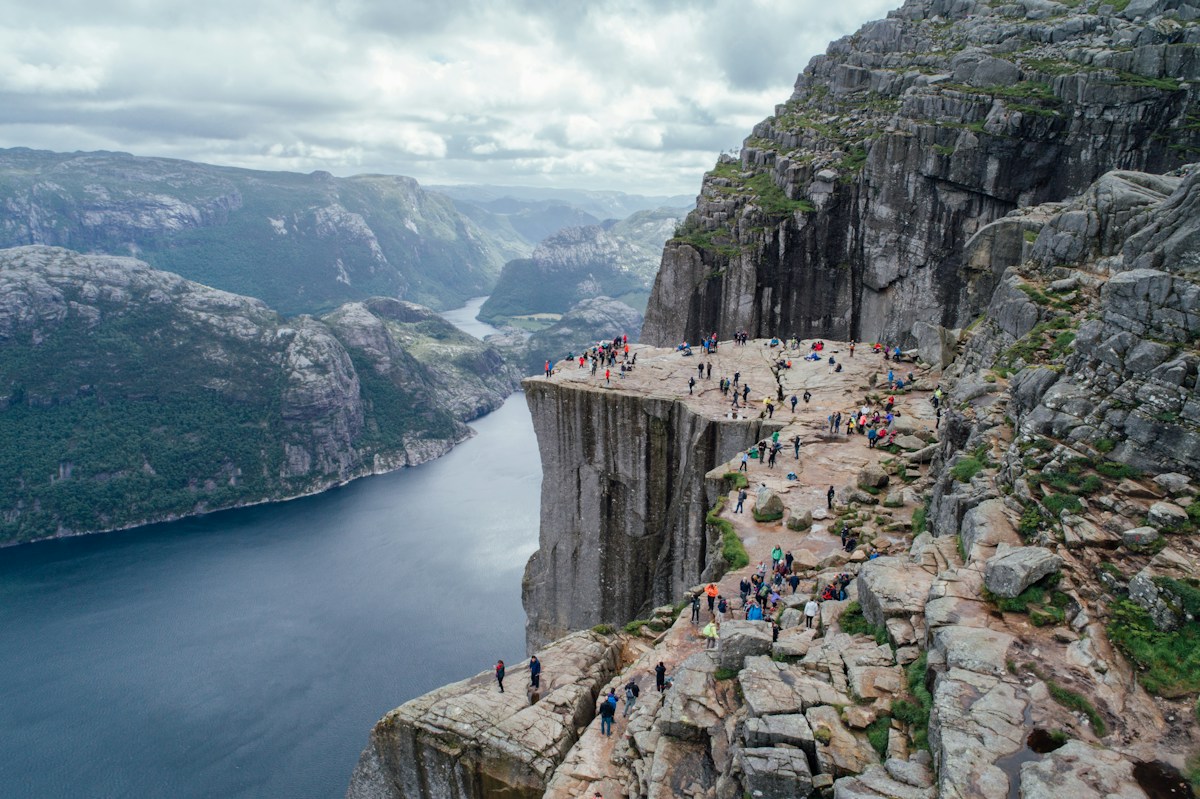
The Lysefjord is famous for two legendary viewpoints: Preikestolen (Pulpit Rock) — a 604-meter sheer granite platform that is Norway's most famous hike — and Kjeragbolten, a boulder wedged between two rock faces 1,000 meters high. It is not the most beautiful fjord in an absolute sense, but it is the fjord with the most memorable trekking experiences.
Pros: The trek to Preikestolen (4-5 hours round trip) is accessible to anyone in good shape, guaranteed breathtaking view.
Cons: Crowded in July-August, requires parking and ferry reservations.
When: September is magical — autumn leaves on the slopes of the fjord with warm colors and fewer people.
Final Advice: Combine Them
If you have 7-10 days, the ideal combination is: Sognefjord (with Flåm and Nærøyfjord) + Hardangerfjord (with Vøringsfossen) + Preikestolen. This combination covers deep fjords, spectacular waterfalls, and the country's most iconic trekking in a relatively compact way in Western Norway.